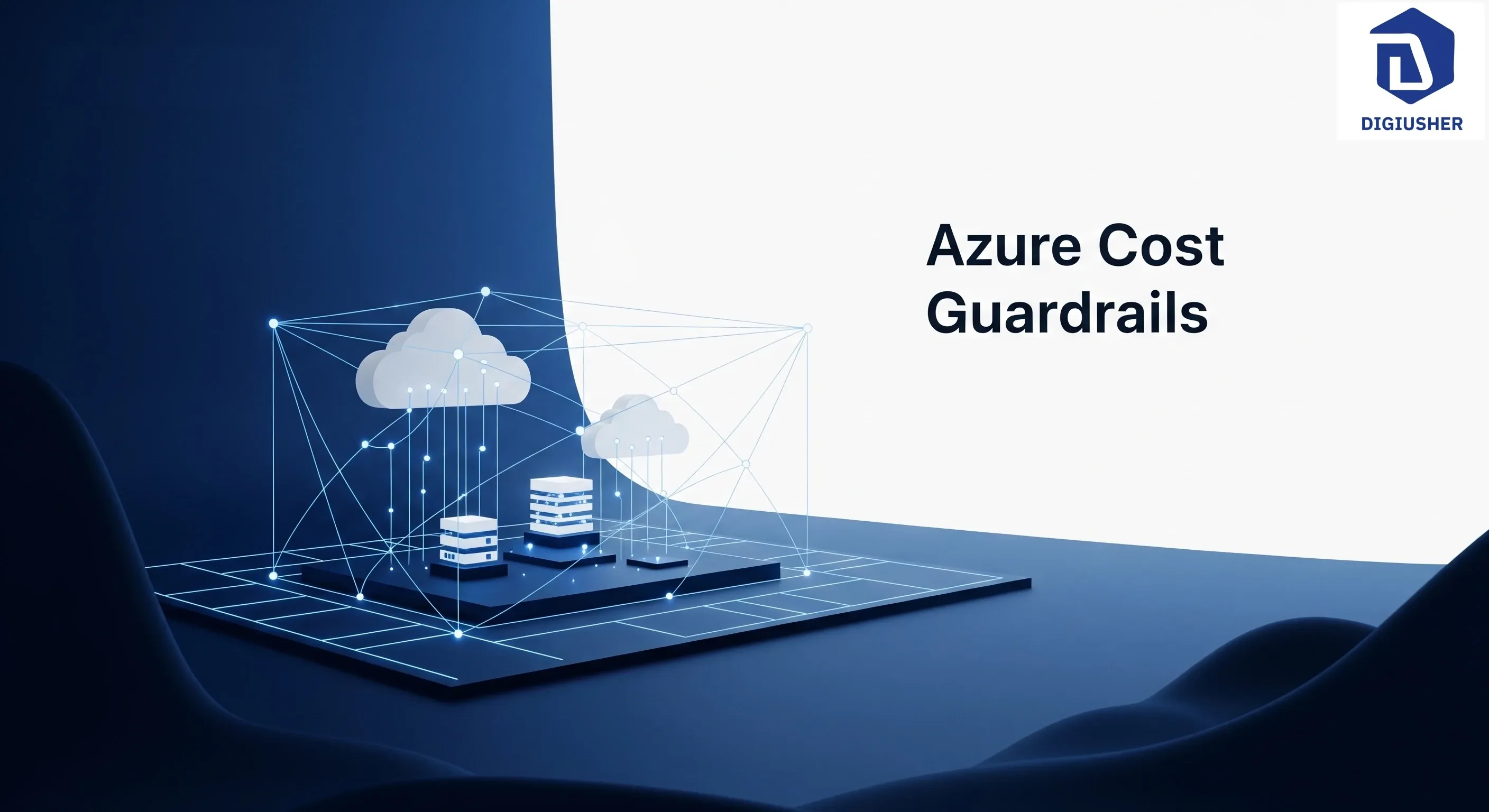
Designing Azure Landing Zone Cost Guardrails
Learn how to build runtime-enforced cost guardrails on Azure Landing Zones with mandatory tagging, dynamic budget automation, and AI cost governance. DigiUsher's FinOps OS closes the gap that native Azure Policy leaves open
Executive Summary
Azure Landing Zones (ALZ) provide the foundational scaffolding for enterprise Azure adoption, enforcing security, identity, and network controls. However, native ALZ components like Azure Cost Management and basic Azure Policy produce a critical gap: cost guardrails that offer visibility but lack automated, runtime enforcement.
For modern enterprises, cloud spend is a dynamic financial variable. To protect margins and ensure predictable ROI, the CIO and FinOps team must implement a systematic FinOps Operating System (FinOps OS). This OS extends the ALZ framework by embedding mandatory financial policies, advanced tagging enforcement, and automated budget guardrails directly into the execution layer — turning cost control from a periodic review into continuous governance.
Key Statistics
| Metric | Figure | Source |
|---|---|---|
| Cloud spend wasted without embedded governance | 27% | PwC |
| Year autonomous FinOps platforms dominate adoption | 2026 | Forrester |
| Leakage tolerance with a FinOps OS execution layer | Zero | DigiUsher |
Why Native ALZ Policy Falls Short on Cost
The Azure Landing Zone architecture — built on Management Groups, Subscriptions, and Resource Groups — excels at security and compliance. But financial governance requires a different muscle. Native Azure tools present three core limitations:
1. Reactive Reporting Without Enforcement
Azure Cost Management provides robust reporting and budget alerts but offers no runtime throttling or automated cleanup when thresholds are breached. Alerts inform; they do not enforce.
2. Weak Tagging Taxonomy Enforcement
While Azure Policy can mandate tag presence, it often fails to enforce a consistent taxonomy or ensure mandatory cost attribution before provisioning occurs. The result: orphaned costs and inaccurate chargeback reporting across business units.
3. Decentralised Marketplace Spend Complexity
ALZs are designed for decentralised innovation, where product teams provision resources independently. This freedom, coupled with access to the Azure Marketplace, leads to fragmented spending on third-party SaaS and AI services that native policy cannot normalise or allocate.
Deloitte: Without runtime guardrails and automated mechanisms, cloud cost governance remains theoretical, allowing financial drift within established frameworks like Azure Landing Zones.
Three Pillars of Azure Landing Zone Cost Guardrails
Effective financial governance within an ALZ requires treating cost control as a technical execution priority — not just a financial reporting requirement.
Pillar 1 · Mandatory Cost Attribution via Policy-as-Code
The core principle of governing an ALZ is ensuring every provisioned resource is attributed to a P&L owner.
- Enforced Tagging OS: Implement a non-bypassable tagging taxonomy (e.g.,
CostCenter,Environment,ProductName). This policy must refuse provisioning if critical tags are missing or deviate from the standard. - P&L-Grade Chargeback: Use enforced tags to automate allocation of shared service costs (networking, centralised databases), rolling them up to specific business units for accurate financial reporting.
- Consequence Management: Azure Resource Graph and Policy provide the foundation, but an external FinOps OS is required to manage the consequences of non-compliance — e.g., automatic shutdowns, not just alerts.
Pillar 2 · Dynamic, Runtime Budget Guardrails
Azure budgets offer excellent alerts, but modern FinOps requires financial policy to trigger direct technical actions.
- Actionable Budget Triggers: Configure budgets as dynamic guardrails that, upon hitting defined consumption thresholds (e.g., 80%), trigger automated throttling of expensive services like Azure Kubernetes Service or high-end VMs.
- Suspension & Decommissioning: Automatically flag or terminate untagged, idle, or oversized resources within a specific subscription or Management Group — enforced, not just reported.
- Azure Policy Integration: Leverage Azure Policy not just to audit compliance, but to enforce the presence of advanced guardrails managed by the FinOps OS at the infrastructure layer.
Forrester: Autonomous cloud governance platforms will dominate FinOps adoption by 2026, shifting control from manual remediation to automated enforcement.
Pillar 3 · Governing AI and Marketplace Economics
The use of Azure OpenAI, GPU SKUs for GenAI, and third-party SaaS via the Azure Marketplace introduce unique cost volatility.
- AI Cost Intelligence: Govern token-based billing and GPU utilisation for Azure OpenAI by integrating cost intelligence directly into the FinOps OS. This enables budget guardrails specific to inference costs and LLM consumption per product team.
- Marketplace Normalisation: Normalise complex Azure Marketplace invoices — breaking out usage-based and subscription hybrid billing — so third-party costs are accurately attributed alongside core infrastructure.
- Shadow IT Prevention: Decentralised purchasing through Marketplace becomes a financial blind spot without governance. The FinOps OS prevents this from distorting P&L-level reporting.
McKinsey: Fragmented cost allocation and unpredictable spend patterns occur unless governance is embedded into AI and Marketplace procurement processes.
DigiUsher FinOps OS vs. Native Azure: Capability Comparison
| Capability | Azure Policy & Cost Management | DigiUsher FinOps OS Layer |
|---|---|---|
| Tagging | ⚠ Audit & simple mandate | ✓ Mandatory taxonomy enforcement (Tagging OS) |
| Budget Control | ⚠ Alerts & reporting only | ✓ Automated shutdown/throttling (Policy Engine) |
| Marketplace | ⚠ Visibility only | ✓ Billing normalisation & procurement governance |
| Cost Allocation | ⚠ Basic chargeback | ✓ P&L-grade chargeback for complex models |
| AI Workloads | ⚠ Infrastructure view only | ✓ Token economics & GPU optimisation |
PwC estimates enterprises waste 27% of cloud spend due to inefficiencies that embedded governance can prevent.
Actionable Implementation Checklist
- Define Cost Ownership — Finalise your mandatory tagging schema (e.g.,
ApplicationID,BusinessUnit) and use the FinOps OS to enforce this taxonomy across all Azure subscriptions within the ALZ. - Enable Runtime Policy — Implement automated budget guardrails that throttle or suspend non-compliant or over-budget resources at the execution layer, moving beyond reactive budget alerts.
- Govern the Perimeter — Use the Marketplace OS layer to normalise and attribute costs from third-party services procured via the Azure Marketplace, integrating them into your financial reporting fabric.
- Optimise Azure Compute — Implement automated lifecycle rules for rightsizing and scaling down idle resources: VMs, Azure Container Apps, and Azure OpenAI instances consuming tokens without attributed ownership.
Frequently Asked Questions
Why do Azure Landing Zones need additional cost guardrails beyond native Azure tools?
Native Azure Cost Management provides alerts and reporting but does not enforce runtime throttling or automated cleanup when resources exceed financial thresholds. A FinOps OS layer is required to add automated budget actions — throttling, suspension, decommissioning — that transform governance from theoretical to operational.
What is mandatory cost attribution in an Azure Landing Zone?
Mandatory cost attribution enforces a unified tagging taxonomy (CostCenter, Environment, ProductName) via Policy-as-Code so every provisioned resource is linked to a P&L owner before deployment is allowed. This eliminates orphaned costs and enables accurate chargeback reporting at business-unit level.
How can Azure budgets trigger automated actions rather than just alerts?
By integrating a FinOps OS with Azure Policy, budget thresholds (e.g., 80% consumed) can trigger automated throttling of expensive services like AKS or GPU-backed VMs, and initiate automatic decommissioning of idle or untagged resources — without manual intervention.
How does DigiUsher extend Azure cost governance for AI workloads?
DigiUsher’s FinOps OS provides token-level cost intelligence for Azure OpenAI services, mapping inference costs and GPU utilisation to specific product teams. This enables budget guardrails at the AI service level — not just the infrastructure level — preventing runaway LLM spend before it reaches the invoice.
DigiUsher in 30 min
See which team owns every dollar — in real time.
DigiUsher turns raw billing data into allocation finance trusts — chargeback, showback, and guardrails included.
Book a 30-min walkthroughNo hard pitch · tailored to your stack
Continue Reading
More from the DigiUsher editorial team.
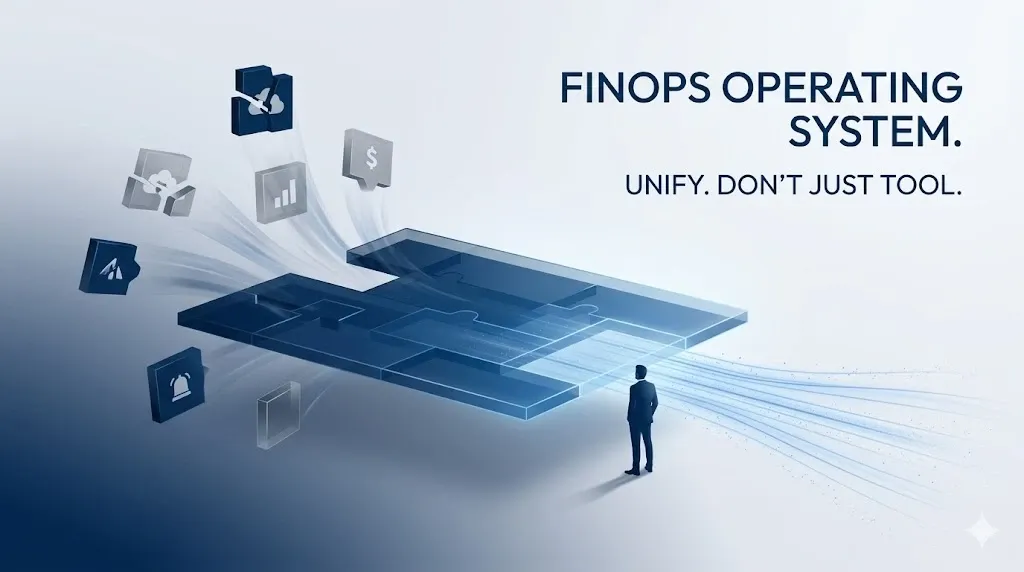
Why You Need a FinOps Operating System — Not Just Tools
Traditional FinOps tools deliver visibility. A FinOps Operating System delivers governance. Learn why the category shift from cost dashboards to a FinOps OS is the defining enterprise cloud decision of 2026 — and how DigiUsher built the control layer that CIOs, CFOs, and FinOps teams actually need.
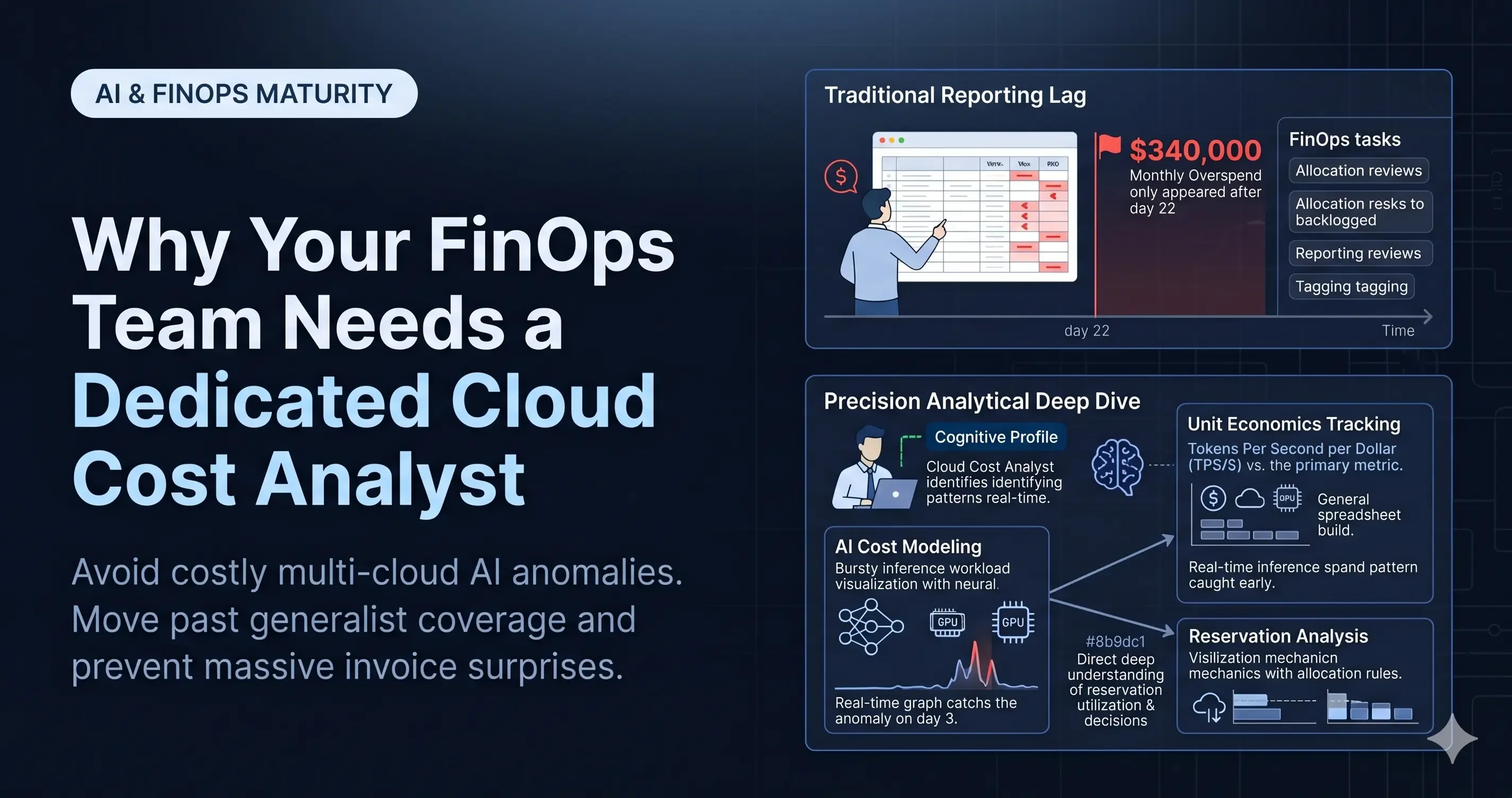
Why Your FinOps Team Needs a Dedicated Cloud Cost Analyst in 2026
Explores the emerging role of specialized cloud cost analysts and how they differ from traditional financial analysts in driving FinOps success
Why FinOps Teams Are Burning Out: The Hidden Cost of Manual Cloud Management
Addresses the growing burnout crisis in FinOps teams due to reactive, manual processes and constant fire-fighting, positioning automation and proactive governance as the solution