AI Infrastructure Spending Optimization: A FinOps Playbook for GPU and Compute Management
A practical guide for managing the explosive growth in AI/ML infrastructure costs, including GPU optimization strategies and multi-cloud AI spending visibility
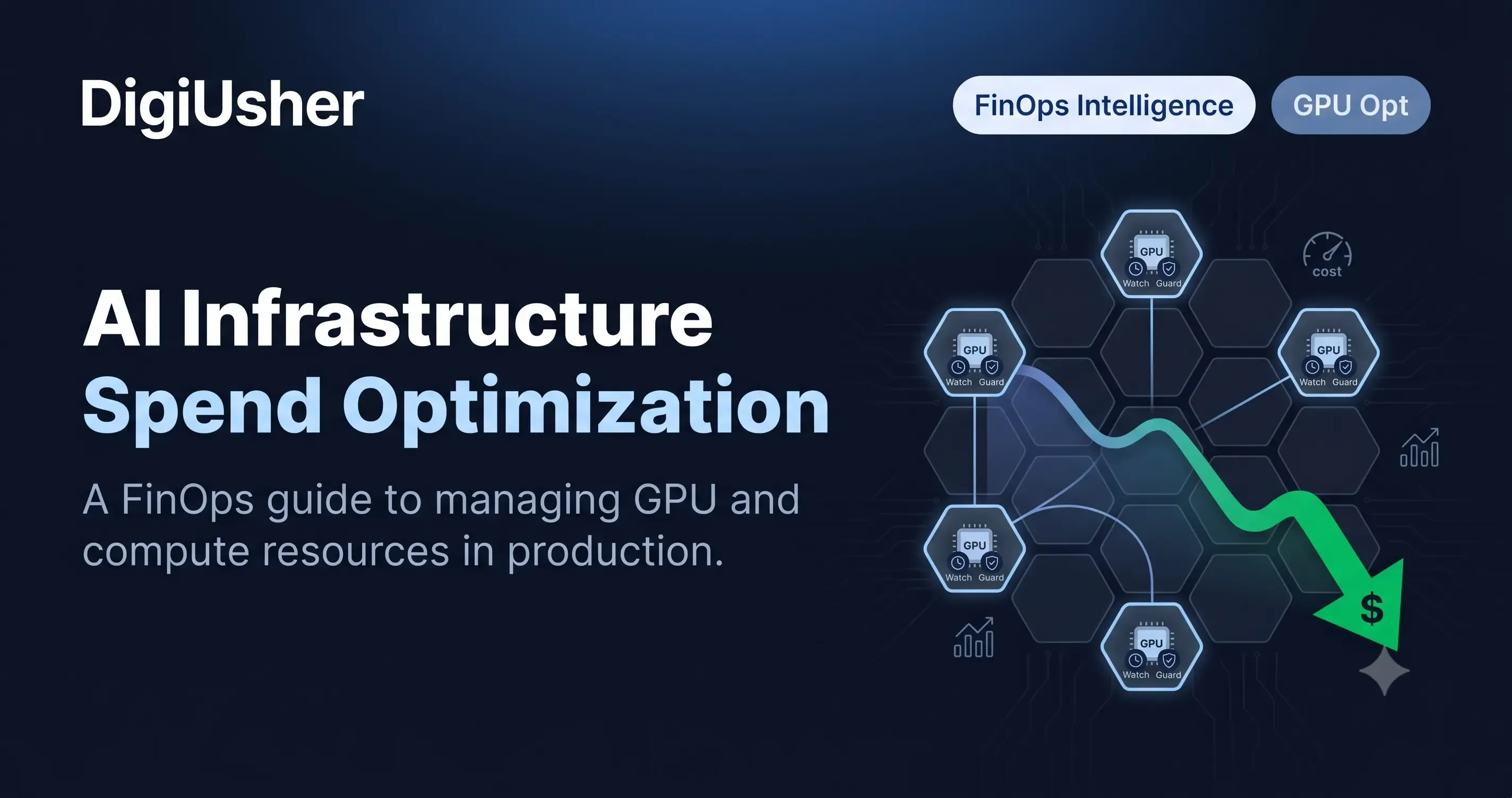
You ran the utilization report on Friday. The numbers looked reasonable—average GPU utilization sitting around 68%, committed spend accounted for, and no obvious runaway jobs.
Then Monday morning, the cloud bill arrived. It was $340,000 over forecast.
The culprit? A distributed training run that spun up 200 on-demand NVIDIA A100 instances over the weekend. It ran for 11 hours, produced a model checkpoint that the ML team ultimately decided to discard, and terminated. It left no anomaly flag, no alert, and zero attribution to any cost center that anyone could find.
This is not a technology failure. It is a process failure with a structural cause: most FinOps workflows were designed for predictable, stateful workloads. AI/ML infrastructure is neither.
Why the Standard Playbook Fails When AI Workloads Enter the Picture
The core problem with GPU cost management is that the traditional FinOps playbook—tag everything, right-size instances, buy reservations, and review weekly—was built on assumptions that simply do not hold for AI infrastructure.
Traditional applications have relatively stable, knowable compute profiles. A web server cluster might spike during peak traffic, but the envelope is predictable. AI agents and training jobs behave entirely differently.
According to DigiUsher Live TCO Index data:
- AI agents generate 40% more bursty compute than traditional enterprise applications.
- This burst is not randomly distributed—it clusters aggressively around ad-hoc experimentation cycles, model evaluation windows, and automated pipeline reruns.
- These spikes frequently occur outside business hours, falling entirely outside the visibility window of weekly governance reviews.
The Stranded Reservation Trap
The direct result of this volatility is a specific, brutal failure mode: reserved instance (RI) commitments purchased against projected “steady-state” GPU demand get stranded when actual workloads shift to on-demand for engineering flexibility—and then they never rebalance.
Our data shows that reserved instance utilization averages just 61% at enterprises without active, specialized FinOps governance. This means 39% of committed GPU spend is generating absolutely zero compute return. For an organization carrying $2M in annual GPU reservations, that is $780,000 in committed spend producing nothing.
The Three-Layer Remediation Playbook
The fix is not to stop buying reservations or strangle innovation. It is to instrument GPU infrastructure at a granularity that matches the actual decision cycle of AI teams, not the reporting cycle of finance.
Concretely, this requires executing a connected, three-layer framework:
Layer 1: Enforce Job-Level Attribution Upstream
Attribution must happen at the job level, not the cluster level. A Kubernetes node running mixed training and inference workloads cannot be meaningfully attributed to a cost center at the node level—the cost signal is far too coarse.
Pod-level and job-level tagging, enforced automatically at deploy time rather than retroactively applied, is the minimum viable attribution schema for AI infrastructure. This is not a tooling problem; it is a policy problem. FinOps practitioners must work upstream with MLOps teams to bake financial governance directly into the orchestration pipeline before jobs are scheduled, not after bills arrive.
Layer 2: Shift to $TPS/$ Unit Economics
The unit economics metric for AI workloads must shift from cost-per-hour to Tokens Per Second per Dollar ($TPS/$).
Cost-per-hour only tells you what you spent. $TPS/$ tells you what value you actually extracted:
Consider this scenario: An NVIDIA H100 SXM GPU running an inference workload at 60% utilization may appear efficient on a traditional input-cost dashboard while simultaneously delivering worse $TPS/$ than a smaller, fully saturated, and lower-cost hardware configuration. Without an output-normalized metric, optimization decisions are made blindly on input cost alone—systematically underinforming every hardware architecture and reservation decision downstream.
Layer 3: Normalize Multi-Cloud Data via FOCUS 1.3
Multi-cloud AI spend requires a unified cost schema before it requires a unified dashboard. Most organizations running complex GPU workloads across AWS, GCP, and Azure are dealing with three completely disparate pricing structures, three different reservation models, and three conflicting tag schemas—none of which map cleanly to one another.
The FOCUS 1.3 specification exists precisely to solve this normalization crisis. It provides a vendor-neutral cost and usage data schema that makes cross-cloud GPU spend directly comparable at the exact line-item level. Implementing FOCUS 1.3 ingestion is unglamorous backend plumbing, but it is the absolute prerequisite for any multi-cloud AI cost governance that produces actionable numbers rather than approximations.
Closing the Visibility Gap with DigiUsher
The DigiUsher FinOps Operating System applies all three of these layers—job-level attribution enforcement, $TPS/$ unit economics tracking, and FOCUS 1.3-normalized multi-cloud ingestion—as a single, interconnected governance framework rather than separate initiatives.
This structural integration matters because a massive weekend overrun cannot be solved by any single isolated capability. It is solved by systematically closing the gap between when a cost is generated and when it becomes visible—shrinking that delta from an industry-average 18-to-24 hours down to mere minutes.
Your Action Item For This Week
There is one highly actionable step available to any FinOps practitioner or engineering leader today: Pull your current GPU reserved instance utilization rate. If it is below 75%, you have a commitment rebalancing problem that no amount of standard dashboard investment will fix without upstream job attribution data. Start there.
🛠️ Need help mapping your exposure? Download our interactive Weekend Blast Radius Calculator to instantly audit your worst-case cloud risk, or drop our open-source GPU Zombie Finder script into your CLI to locate idle, capital-bleeding clusters in under 60 seconds. Want to automate the entire loop? Get in touch with the DigiUsher team today.
DigiUsher in 30 min
Understand what each AI workload costs before scale amplifies the risk.
DigiUsher tracks cost per token, per inference, and per GPU hour — so your unit economics keep pace with adoption.
Book a 30-min walkthroughNo hard pitch · tailored to your stack
Continue Reading
More from the DigiUsher editorial team.
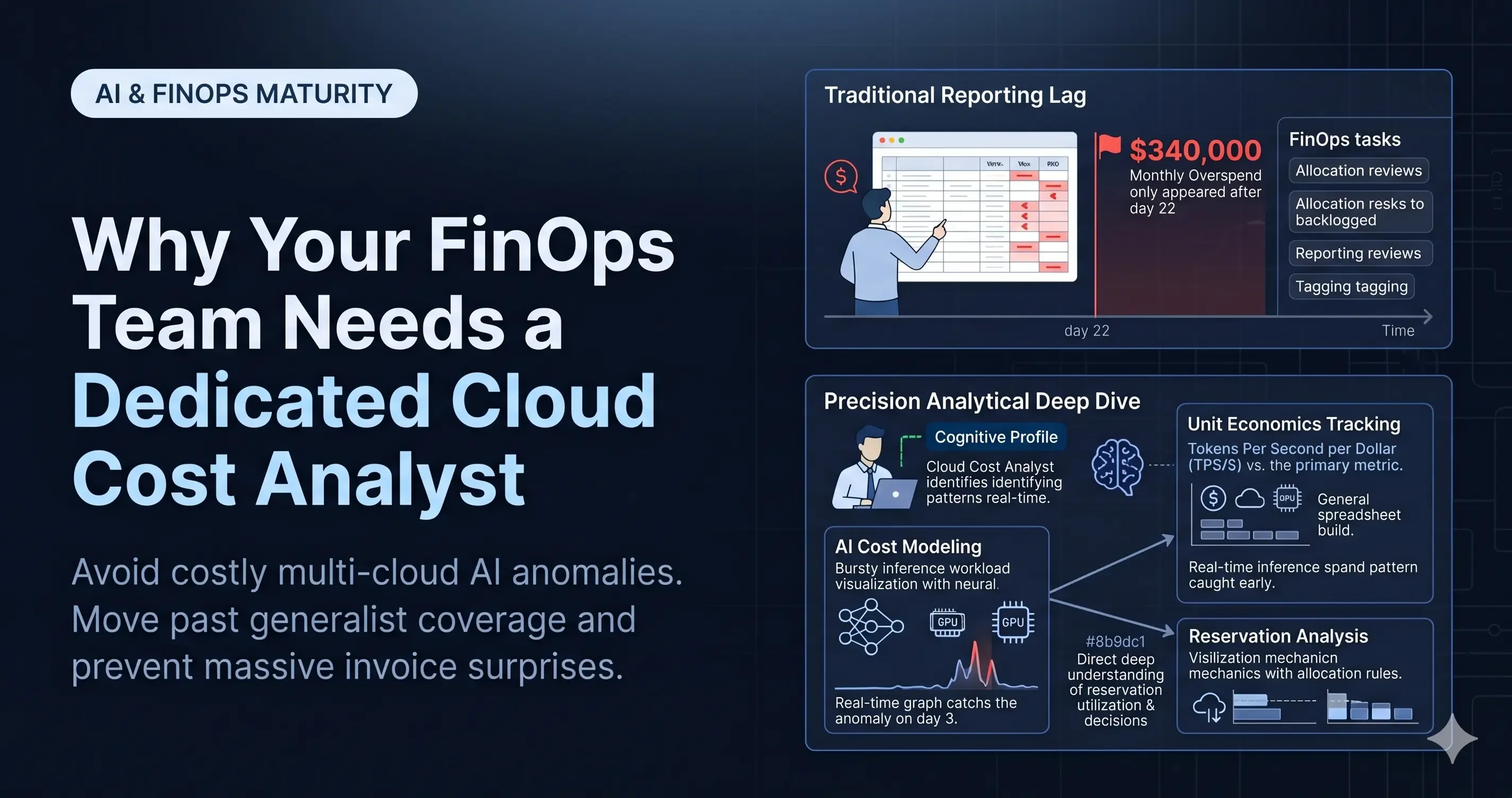
Why Your FinOps Team Needs a Dedicated Cloud Cost Analyst in 2026
Explores the emerging role of specialized cloud cost analysts and how they differ from traditional financial analysts in driving FinOps success
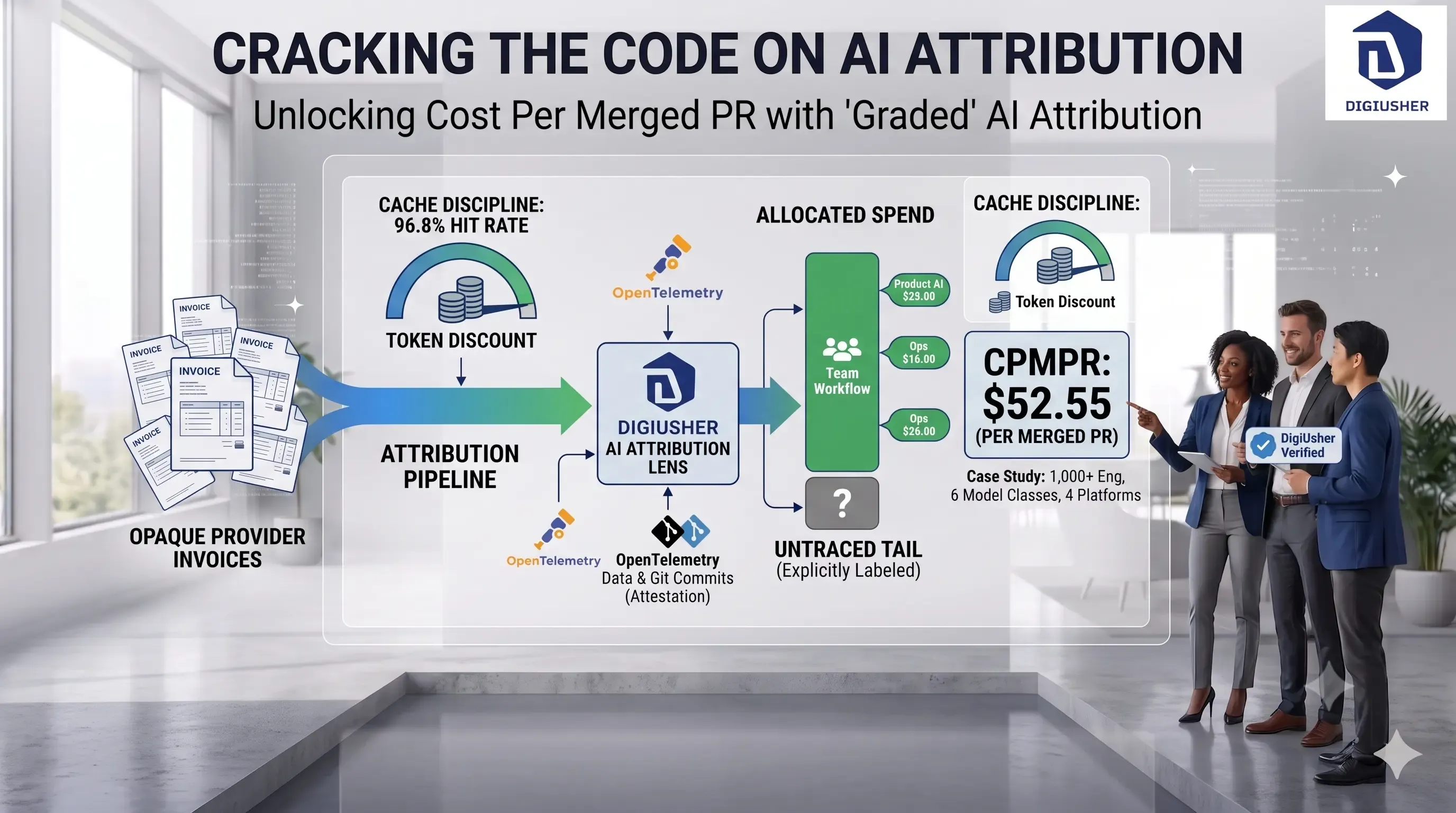
$52.55 Per Merged Pull Request: How One 1,000-Engineer Firm Priced Its Own AI Spend
A public technology firm with 1,000+ engineers refused to run its AI spend on faith. Here's the ledger it built instead — $52.55 per merged PR, 96.8% cache-hit rate, and a blended cost of $0.75 per million tokens.

AI Unit Economics: Why Your AI Invoice Can No Longer Answer the Board’s Question
98% of FinOps teams now manage AI spend, but almost none can price a merged pull request. Here's the framework for AI unit economics in 2026 — and why the invoice alone can't answer the board's question.