Why Your FinOps Team Needs a Dedicated Cloud Cost Analyst in 2026
Explores the emerging role of specialized cloud cost analysts and how they differ from traditional financial analysts in driving FinOps success
The $340,000 Blind Spot: A Structural, Not Staffing, Problem
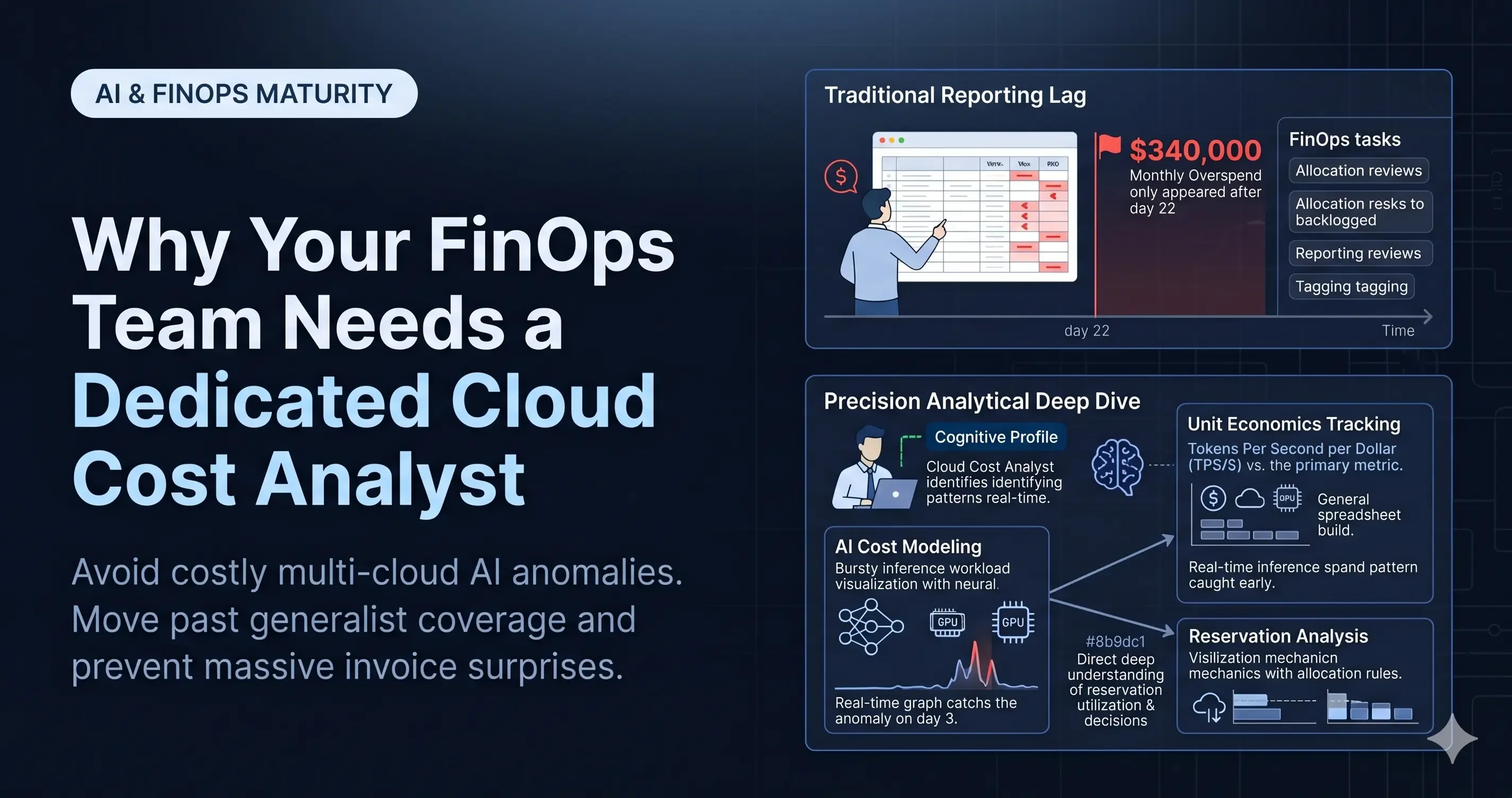
A FinOps Director at a mid-size financial services firm recently told us something that stuck: her team had flagged a $340,000 monthly overspend in their GPU inference layer — but only after the invoice arrived. The anomaly had existed for 22 days. Her team of five was running allocation reviews, negotiating commitments, preparing board-level reporting, and managing a multi-cloud tagging policy simultaneously. Nobody owned the analytical depth required to catch a cost signal that early in the cycle. That is not a staffing problem. That is a structural one.
Why Generalist FinOps Coverage is No Longer Sustainable
This is where the conversation about dedicated cloud cost analysts needs to start — not with headcount justification, but with role architecture. The FinOps function has matured enough that generalist coverage is no longer a reasonable operating model for organizations running complex, multi-cloud, AI-augmented workloads. The question is no longer whether to specialize. It is whether your organization has already paid the price for not doing so.
Traditional Finance vs. Cloud Economics: A Different Cognitive Profile
The distinction between a traditional financial analyst and a cloud cost analyst is not cosmetic. A traditional financial analyst operates on historical data, periodic reporting cycles, and variance analysis against a budget that was set months earlier. That model was designed for capital that moves slowly. Cloud spend does not move slowly. According to the DigiUsher live TCO index, the average enterprise FinOps tool carries an 18-to-24-hour anomaly detection lag — and that lag compounds when there is no analyst whose primary accountability is pattern recognition at the infrastructure layer.
A dedicated cloud cost analyst operates at the intersection of engineering and finance in a way that a generalist cannot. They understand reservation utilization mechanics. They can read a cost explorer without a data translation layer. They know the difference between a tagging policy failure and a workload placement decision that became a cost event. They monitor Tokens Per Second per Dollar (TPS/$) on inference workloads, not because they are engineers, but because that metric is the unit of cost accountability for AI infrastructure. This is a different cognitive profile from someone who builds budget models in a spreadsheet and reviews monthly P&L variances.
The State of FinOps 2026: Navigating Scale and the AI Capability Gap
The structural case is reinforced by scale data. The State of FinOps 2026 report shows that organizations managing $100M or more in cloud spend average just 8–10 FinOps practitioners — and those organizations are scaling their governance capacity through federation, not headcount growth. That means each practitioner carries more analytical surface area than the role was originally scoped to handle. When a FinOps Director is accountable for stakeholder communication, CoE governance, commitment strategy, and anomaly response simultaneously, the precision analytical work — the kind that catches a $340,000 overspend in day three instead of day twenty-two — gets deprioritized by necessity, not by negligence.
The State of FinOps 2026 also identifies AI cost management as the single most desired new skillset in FinOps teams across all organization sizes. This is not aspirational language. It reflects that organizations are already encountering cost events they do not have the internal capability to diagnose. AI workloads introduce cost behavior that traditional FinOps tooling was not designed to model — bursty inference demand, variable token throughput, GPU reservation inefficiency, and egress patterns that emerge at runtime rather than at architecture review. A dedicated cloud cost analyst who owns this layer is not a luxury role. It is the functional equivalent of what a database administrator was to IT infrastructure in 2008: essential, often absent, and expensive to learn the hard way.
The VP Finance Mandate: Conducting a Role Audit Before the Next Invoice
The VP Finance reading this faces a legitimate governance question: if cloud spend is now a material budget line — and for most enterprises it is — what is the internal accountability structure for the precision work that protects that line? A single FinOps team that owns strategy, governance, negotiation, and deep-dive analysis is not a team. It is a backlog with a title.
The concrete action here is not to immediately post a job description. It is to conduct a role audit. Map where analytical depth is currently required in your FinOps workflow — reservation analysis, anomaly investigation, AI cost modeling, unit economics tracking — and identify which of those tasks are being absorbed by senior practitioners who should be operating at the strategic layer. That gap is the job description. The DigiUsher FinOps Operating System provides the attribution and unit economics infrastructure that enables a dedicated cloud cost analyst to operate with precision from day one, rather than spending the first three months building the data model they need to do the job. Structure the role before the next invoice arrives.
DigiUsher in 30 min
Understand what each AI workload costs before scale amplifies the risk.
DigiUsher tracks cost per token, per inference, and per GPU hour — so your unit economics keep pace with adoption.
Book a 30-min walkthroughNo hard pitch · tailored to your stack
Continue Reading
More from the DigiUsher editorial team.
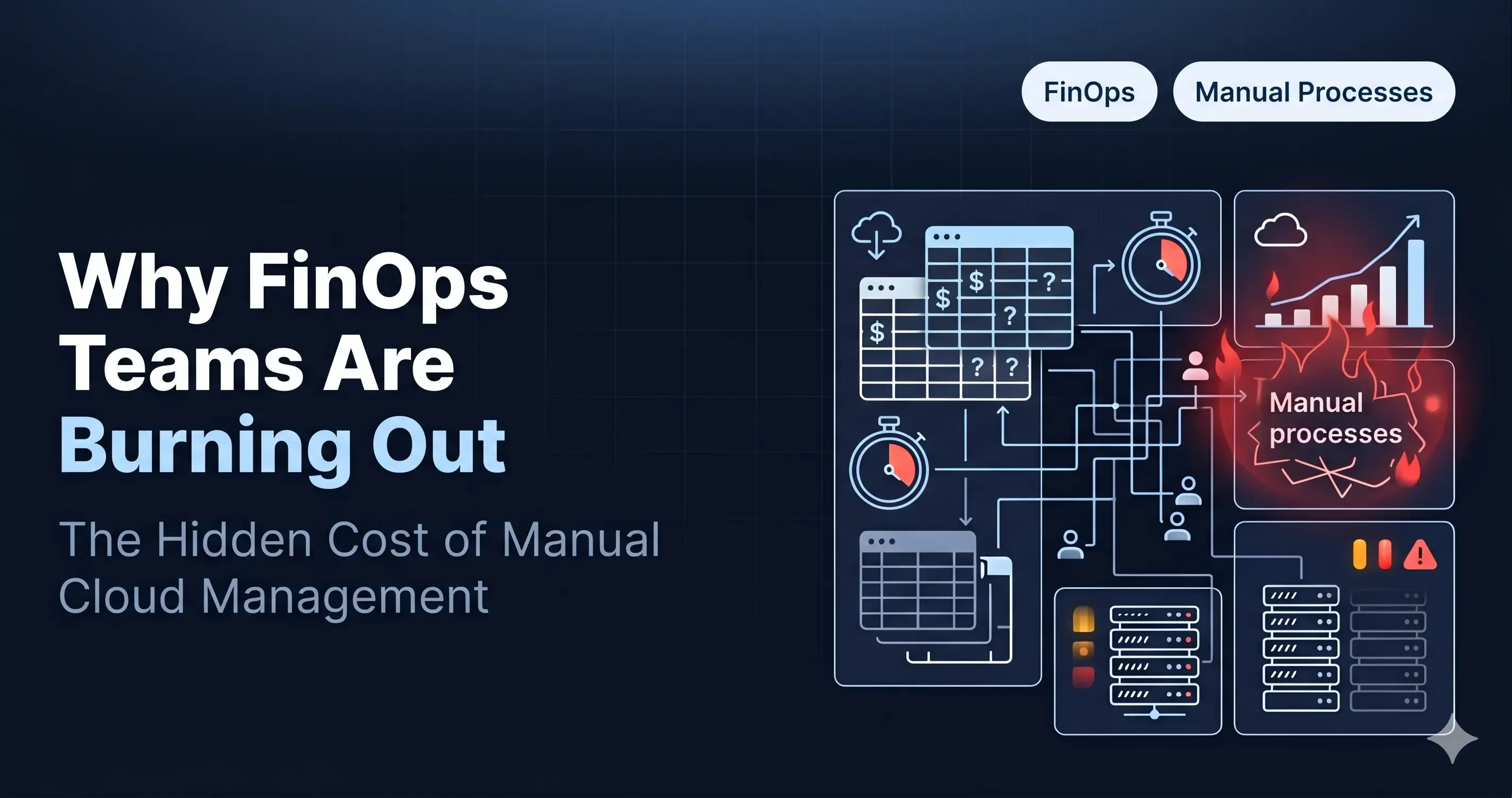
Why FinOps Teams Are Burning Out: The Hidden Cost of Manual Cloud Management
Addresses the growing burnout crisis in FinOps teams due to reactive, manual processes and constant fire-fighting, positioning automation and proactive governance as the solution
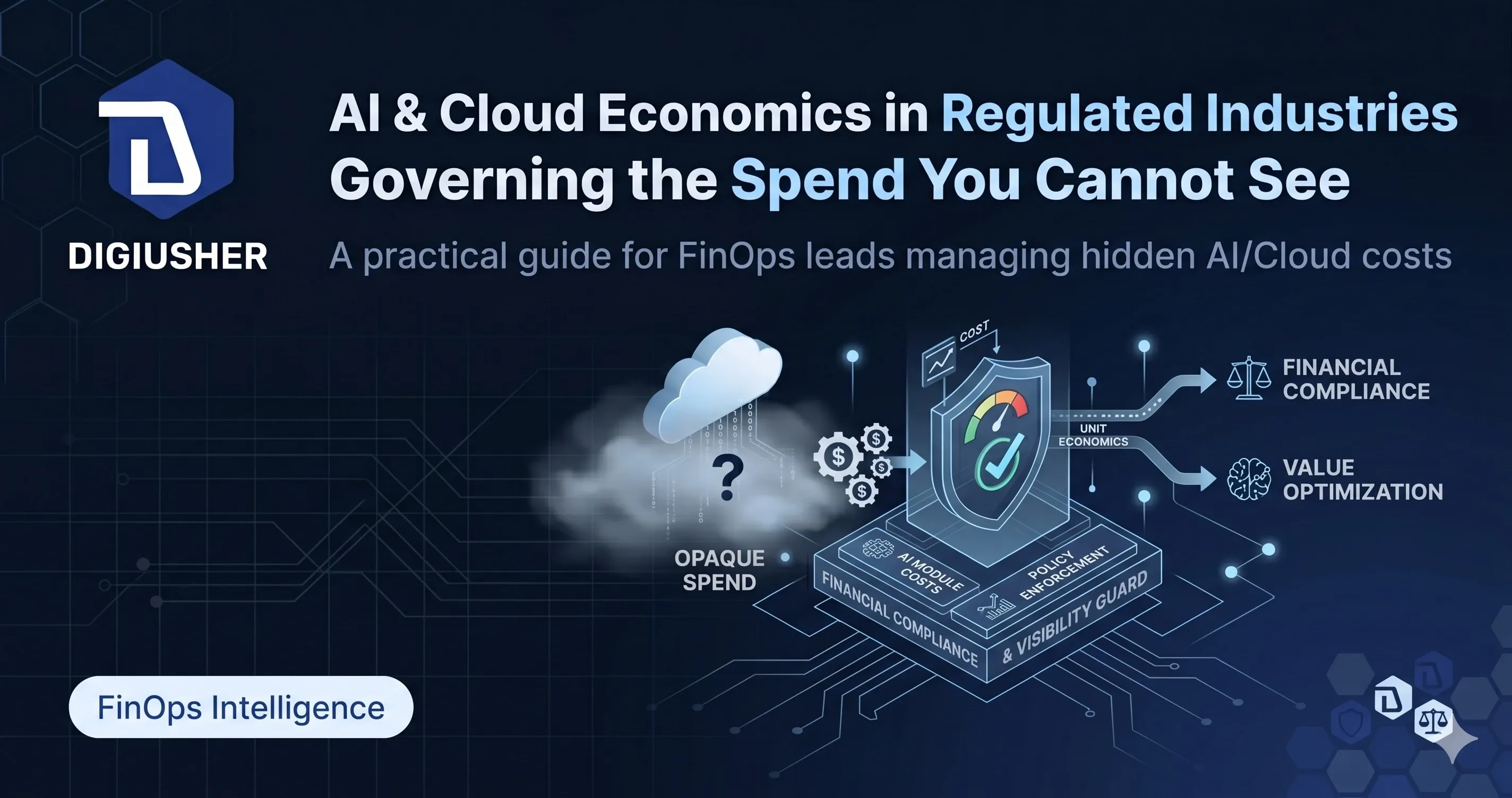
AI and Cloud Economics in Regulated Industries: Governing the Spend You Cannot See
95% of GenAI pilots return nothing measurable, yet regulated industries are scaling AI fastest under the heaviest constraints. Why sovereignty and attribution now decide ROI.
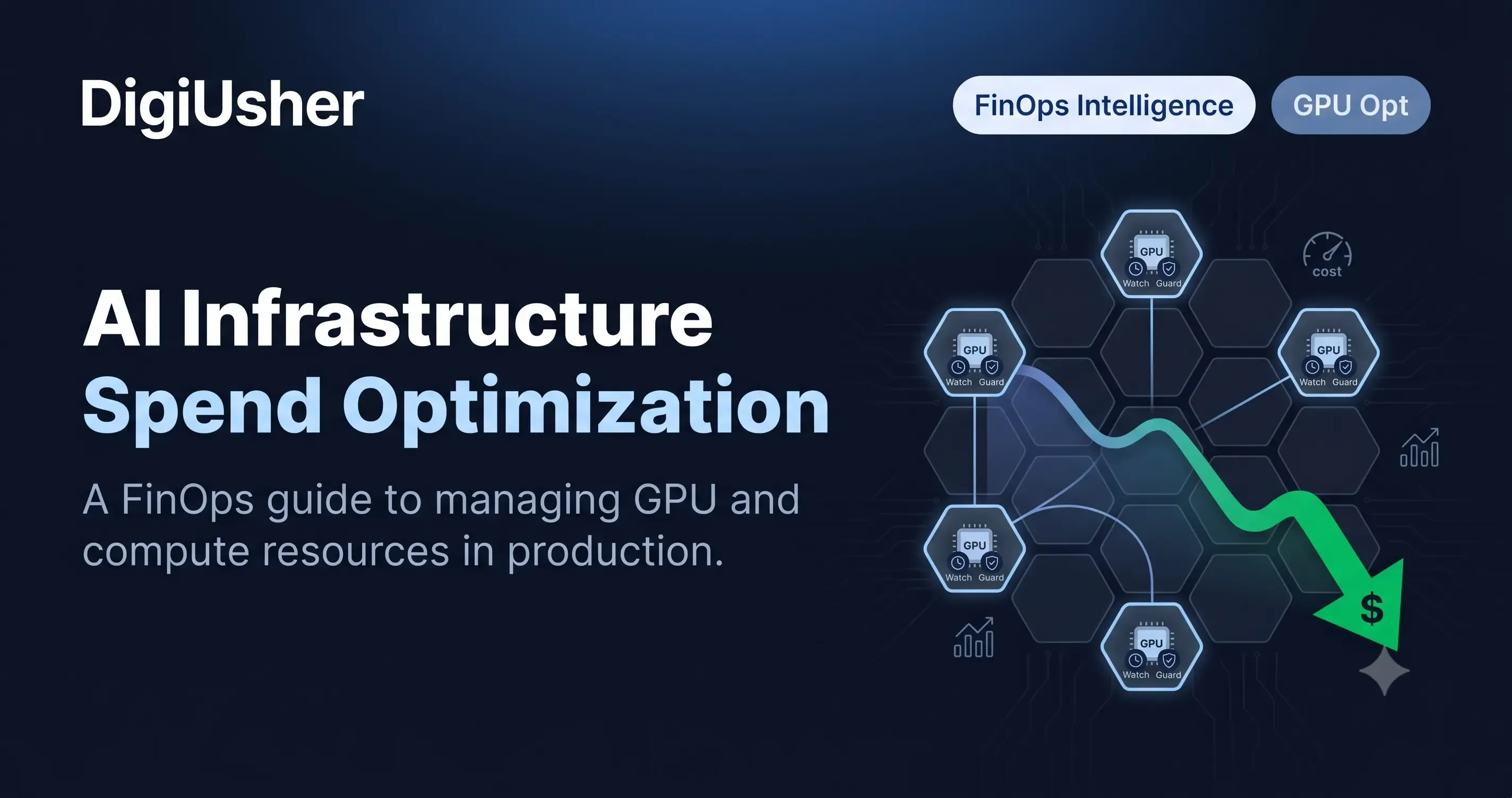
AI Infrastructure Spending Optimization: A FinOps Playbook for GPU and Compute Management
A practical guide for managing the explosive growth in AI/ML infrastructure costs, including GPU optimization strategies and multi-cloud AI spending visibility