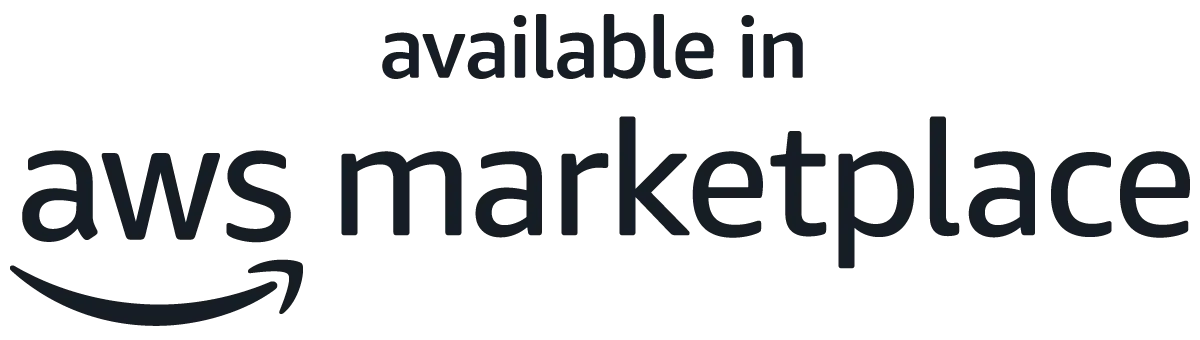
Why FinOps Teams Are Burning Out: The Hidden Cost of Manual Cloud Management
Addresses the growing burnout crisis in FinOps teams due to reactive, manual processes and constant fire-fighting, positioning automation and proactive governance as the solution
The alert came in at 11:47 PM. A compute spike — untagged, unattributed, and already $4,200 into the billing cycle. By the time the on-call FinOps practitioner traced it to a development environment left running over a holiday weekend, the damage was done. The conversation with engineering leadership happened Monday morning. The retrospective documentation took Tuesday afternoon. Wednesday was spent updating the tagging policy that should have caught this in the first place.
That is not a bad week. For many FinOps teams right now, that is a typical one.
The burnout problem in FinOps is not a people problem. It is a structural problem — one that gets worse as cloud environments grow in complexity and organizational expectations rise faster than team capacity. The FinOps Foundation’s State of FinOps 2026 data confirms that 81% of FinOps teams operate with centralized enablement or hub-and-spoke models, not embedded ownership. That means a small, centralized group is responsible for governing cost outcomes across an organization that has no shortage of engineers spinning up infrastructure and no shortage of executives demanding answers about the bill. The math does not work in the practitioner’s favor.
The failure mode here is specific and worth naming directly: reactive governance creates compounding labor. Every cost anomaly that goes undetected until the billing cycle closes becomes a three-part job — investigate, explain, remediate. When that loop runs manually, it consumes the same hours that should go toward proactive optimization, policy enforcement, and the stakeholder education that actually moves the needle long-term. Instead, practitioners become anomaly translators, spending their most capable hours converting billing data into stories that justify why the number is what it is.
The DigiUsher live TCO index documents the detection lag that makes this loop so expensive: legacy FinOps tools carry an 18-to-24-hour anomaly detection lag. In environments where AI agents generate 40% more bursty compute than traditional applications — also tracked in the DigiUsher live TCO index — that lag is not a minor inefficiency. It is the difference between catching a runaway inference job at $200 and explaining a $14,000 line item to a CFO who is already skeptical about AI infrastructure investment. The practitioner does not cause the overrun. But in a manual governance model, they own the entire aftermath.
What makes this particularly draining is the asymmetry of accountability. Engineering teams move fast and break budgets with full organizational blessing — velocity is the mandate. FinOps teams are expected to absorb the financial consequences of that velocity and report clean numbers at month-end, with a fraction of the headcount and none of the authority to slow anything down. That is not a staffing problem that hiring solves. Adding one more analyst to a reactive workflow produces one more analyst doing reactive work.
The structural fix is not more people. It is closing the gap between when cost decisions are made and when governance activates. Proactive governance means automated anomaly detection that fires before the billing cycle closes, not after. It means pre-deployment cost modeling that gives engineering teams a cost signal before infrastructure is provisioned, not a retrospective report after it has been running for three weeks. It means tagging policy enforcement that is automated at provisioning time rather than audited manually in a spreadsheet every quarter.
The DigiUsher FinOps Operating System is designed specifically for this structural gap. It is not a dashboard that surfaces data more attractively. It is an operating framework that shifts governance from the billing layer — where everything is already decided — to the provisioning layer, where decisions can still be influenced. Real-time attribution, automated anomaly detection, and pre-deployment cost modeling are not features that make practitioners more productive within a broken workflow. They replace the broken workflow with one that does not require a practitioner to be on-call at 11:47 PM to prevent a $4,200 weekend surprise.
The State of FinOps 2026 identifies AI cost management as the single most desired new skillset in FinOps teams across all organization sizes. That demand is real — but it will go unmet if practitioners are spending their capacity on manual cost archaeology instead of building the governance frameworks that make AI infrastructure sustainable. The economic pressure on cloud spend is not easing. The organizational expectation that FinOps teams will have the answers is not easing either.
The only thing that can ease is the manual load. Start by auditing how many hours per week your team spends explaining past spend versus shaping future spend. If that ratio is not improving, the workflow is the problem — and automation is the only lever that changes it.
DigiUsher in 30 min
Understand what each AI workload costs before scale amplifies the risk.
DigiUsher tracks cost per token, per inference, and per GPU hour — so your unit economics keep pace with adoption.
Book a 30-min walkthroughNo hard pitch · tailored to your stack
Continue Reading
More from the DigiUsher editorial team.
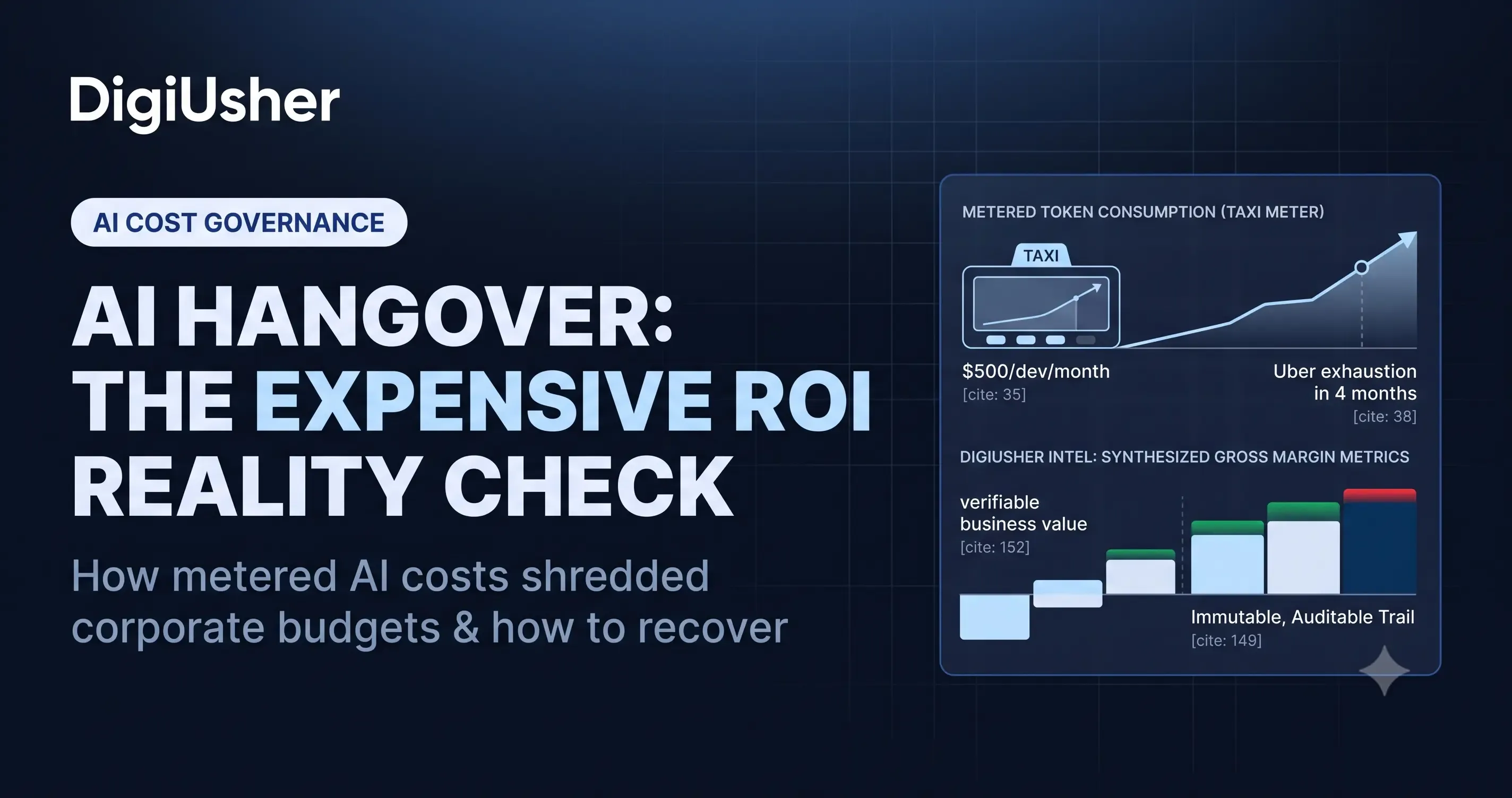
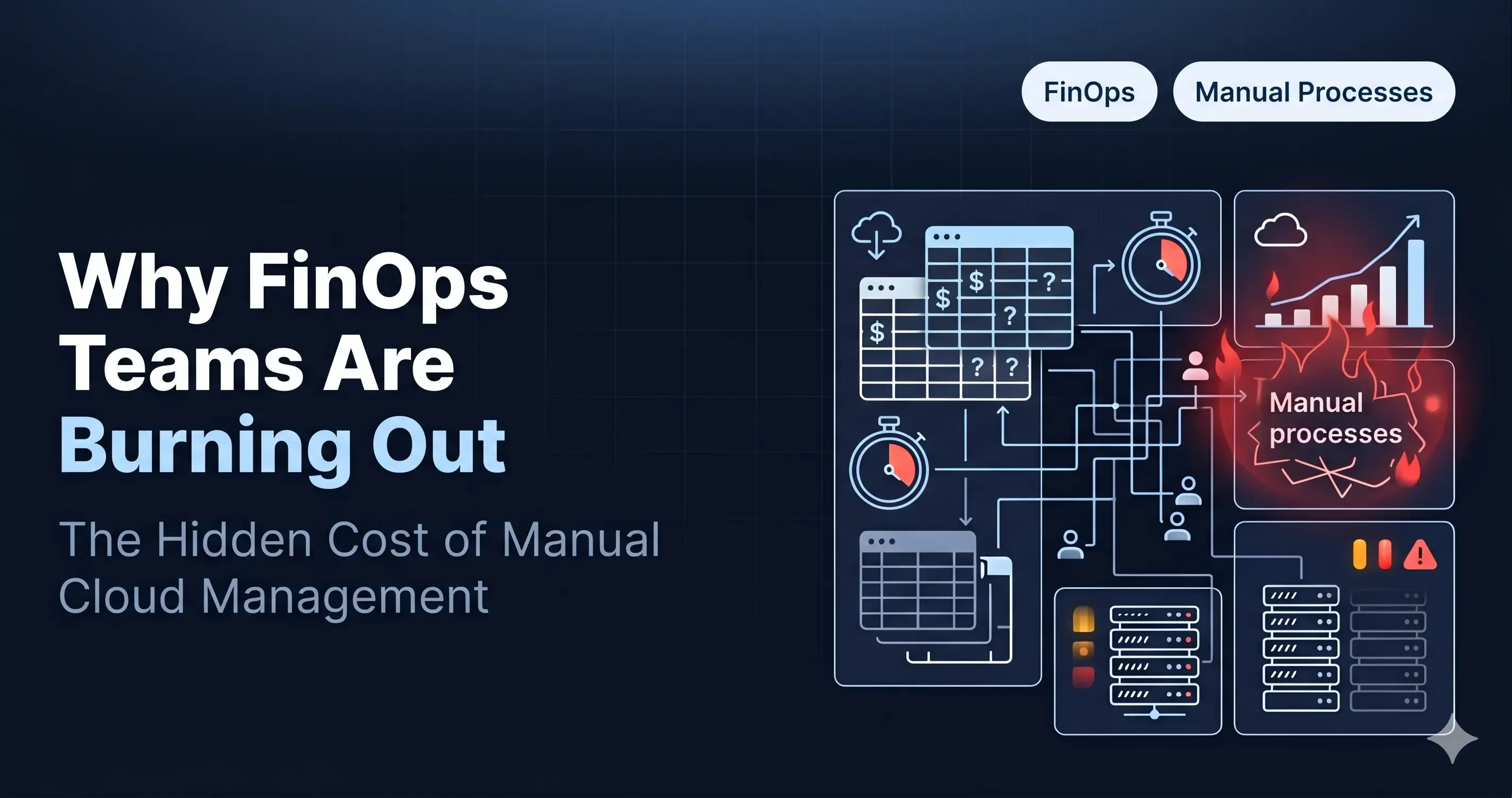
The $2.5 Trillion AI Hangover: Why the C-Suite is Facing an Expensive Reality Check on ROI
AI spending is hitting $2.52T , yet 95% of projects yield zero ROI. Discover how the C-suite can survive the "tokenmaxxing" hangover with DigiUsher.
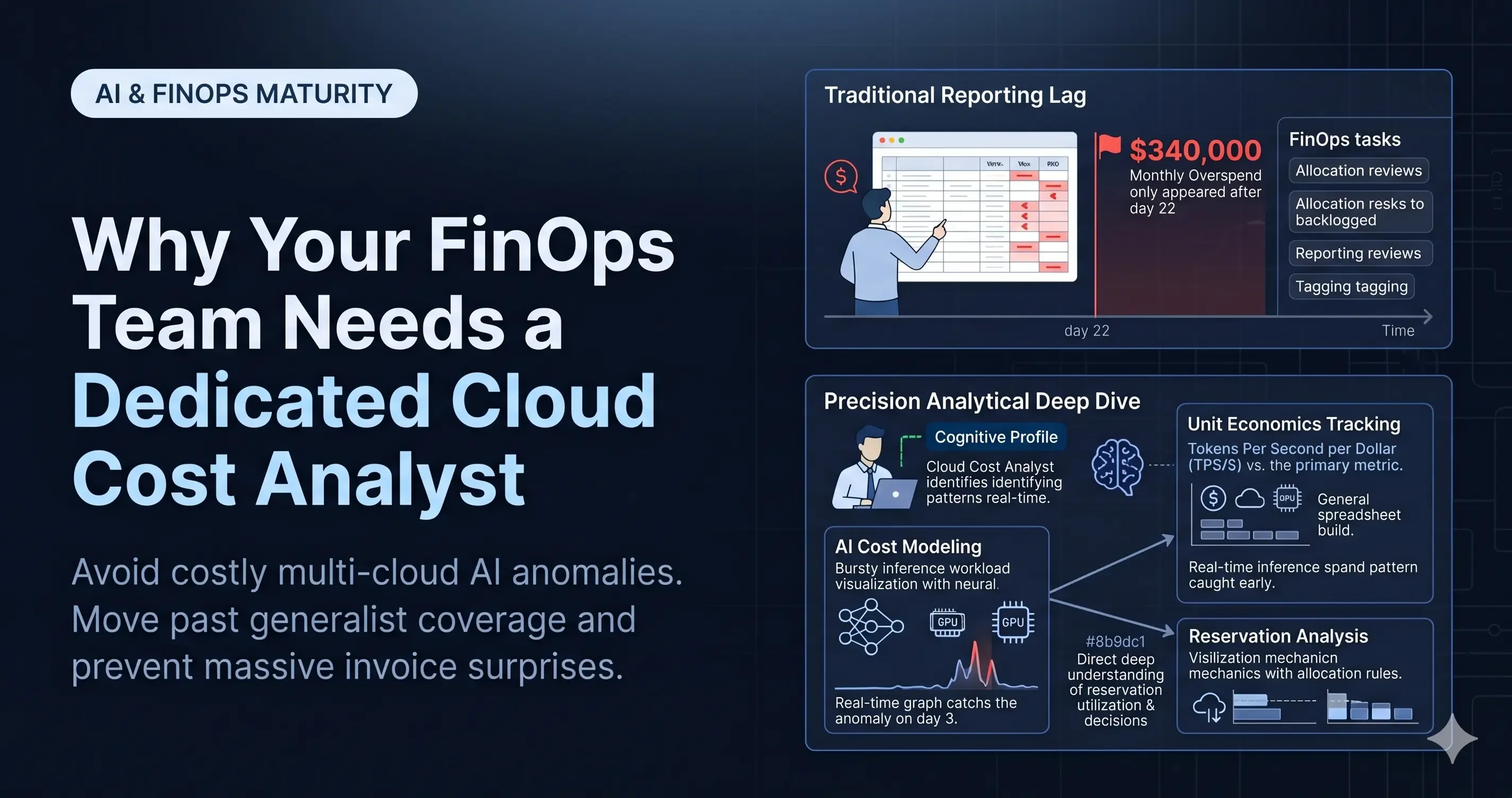
Why Your FinOps Team Needs a Dedicated Cloud Cost Analyst in 2026
Explores the emerging role of specialized cloud cost analysts and how they differ from traditional financial analysts in driving FinOps success
Designing Azure Landing Zone Cost Guardrails
Learn how to build runtime-enforced cost guardrails on Azure Landing Zones with mandatory tagging, dynamic budget automation, and AI cost governance. DigiUsher's FinOps OS closes the gap that native Azure Policy leaves open