Why Your Cloud Budget Process Is Broken (And How FinOps Fixes It)
Most organizations still run cloud budgeting like on-prem capex cycles, creating blind spots and overspend. This piece diagnoses the structural mismatch and offers a FinOps-native budgeting model built around forecasting cadence, team accountability, and variable cost reality.
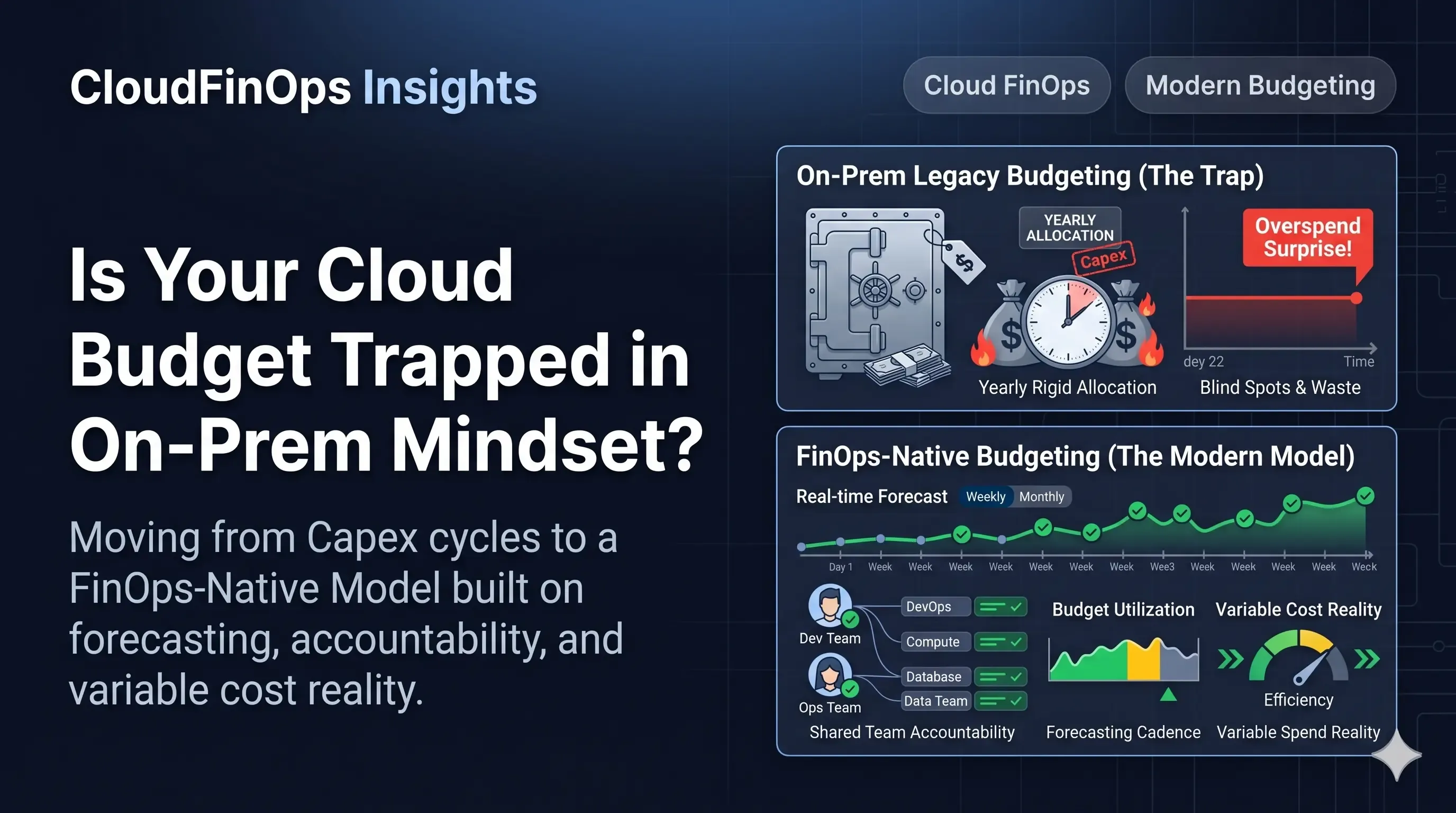
A Finance Director at a mid-size enterprise closes the annual planning cycle in October. She allocates $4.2 million to cloud infrastructure for the following year, applies a 12% growth buffer based on headcount projections, and hands the number to engineering.
By March, the engineering team has already consumed 38% of the annual budget. By June, she is in a boardroom explaining a variance that nobody predicted, using data that nobody flagged, from a system that nobody was watching closely enough.This is not a spending discipline failure. It is a structural mismatch—and it is happening in finance departments across every industry.## The Root Cause: Architectural, Not BehavioralOn-premises infrastructure spending was, by nature, lumpy and predictable. You approved a server purchase, the cost was fixed at the point of procurement, and depreciation schedules handled the rest. Annual budgeting cycles were perfectly suited to this reality because the reality itself was annual in cadence.Cloud infrastructure does not work this way. It is:- Consumption-based and variable by design.
- Highly sensitive to decisions made at the engineering level on any given Tuesday afternoon.Applying a once-a-year budgeting lens to a minute-by-minute cost environment is not conservative financial governance. It is willful blindness dressed up as process.## The Failure Mode: The Costly Detection LagBy the time a quarterly budget review surfaces a variance, the engineering decisions that caused it are already weeks or months in the past.- The Reality: DigiUsher live TCO index data shows legacy FinOps tools carry an 18-to-24-hour anomaly detection lag.
- The Compounding Effect: In a traditional quarterly finance review cycle, that lag compounds into thousands of undiscovered dollars before a single alert reaches a budget owner.The variance does not appear as a real-time signal. It appears as a line item in a spreadsheet, after the fact, with no clear ownership and no actionable path to recovery. Finance leaders who inherit cloud budget accountability without FinOps fluency are handed a governance problem their existing tools were not built to solve.### Traditional vs. FinOps-Native Budgeting
| | | |
| ------------------- | ------------------------------------ | ------------------------------------------- |
| Budget Feature | Legacy Capex Model | FinOps-Native Model |
| Review Cadence | Annual / Quarterly | Continuous / Rolling 30- & 90-day forecasts |
| Cost Type | Fixed & Predictable | Variable & Consumption-based |
| Accountability | VP / Finance Director Level | Individual Engineering Team Level |
| Data Visibility | Static Spreadsheets (After the fact) | Real-time Cloud Cost Attribution |
The Fix: A FinOps-Native Operating Model
The fix is not a new approval policy. It is a different operating model for how cloud budgets are constructed, monitored, and owned. A FinOps-native budget model relies on three structural pillars:
1. Match Forecasting Cadence to Spend Cadence
Cloud costs move weekly. In some workload environments—particularly those running AI inference or bursty compute—they move daily.
DigiUsher live TCO index data shows AI agents generate 40% more bursty compute than traditional applications, meaning any budget built on flat-line assumptions will be wrong by design within weeks of the period starting. A FinOps-native model uses rolling 30- and 90-day forecasts that update continuously against actual consumption signals, not annual projections revised once per quarter.
2. Assign Accountability at the Team Level
Cloud spend is generated by engineering decisions: which services are provisioned, which workloads are left running, and which architectures are chosen. When budget accountability sits only at the VP or Finance Director level, the people making the decisions that drive cost have no visibility into the financial consequences.
The DigiUsher FinOps Operating System addresses this directly by surfacing team-level cost attribution in real time, creating a closed loop between the decision and the financial outcome. This is not cost policing; it is giving engineering teams the information they need to make financially responsible architecture choices without requiring them to become accountants.
3. Build Variable Cost Realities Into the Budget
Cloud spend does not behave like a salary line. It has a floor and a ceiling, not a fixed number. A FinOps-native budget model accounts for this by building:
- Spend Envelopes: Defined thresholds for acceptable variance.
- Escalation Triggers: System alerts that fire before a threshold is breached.
- Reserve Commitments: Strategies that reduce unit cost on predictable baseline workloads while leaving headroom for variable demand.
The Bottom Line
The boardroom conversation is changing. Finance leaders are being asked to govern cloud spend with the same rigor they apply to headcount and capital allocation—and rightly so. The economic pressure heading into mid-year planning cycles makes this a priority that cannot be deferred to the next annual cycle.
The concrete action available right now is this: Audit your current cloud budget against the cadence at which your spend actually moves. If your review cycle is quarterly and your cost environment moves daily, you are not managing cloud spend. You are discovering it—after the damage is done.
DigiUsher in 30 min
See which team owns every dollar — in real time.
DigiUsher turns raw billing data into allocation finance trusts — chargeback, showback, and guardrails included.
Book a 30-min walkthroughNo hard pitch · tailored to your stack
Continue Reading
More from the DigiUsher editorial team.
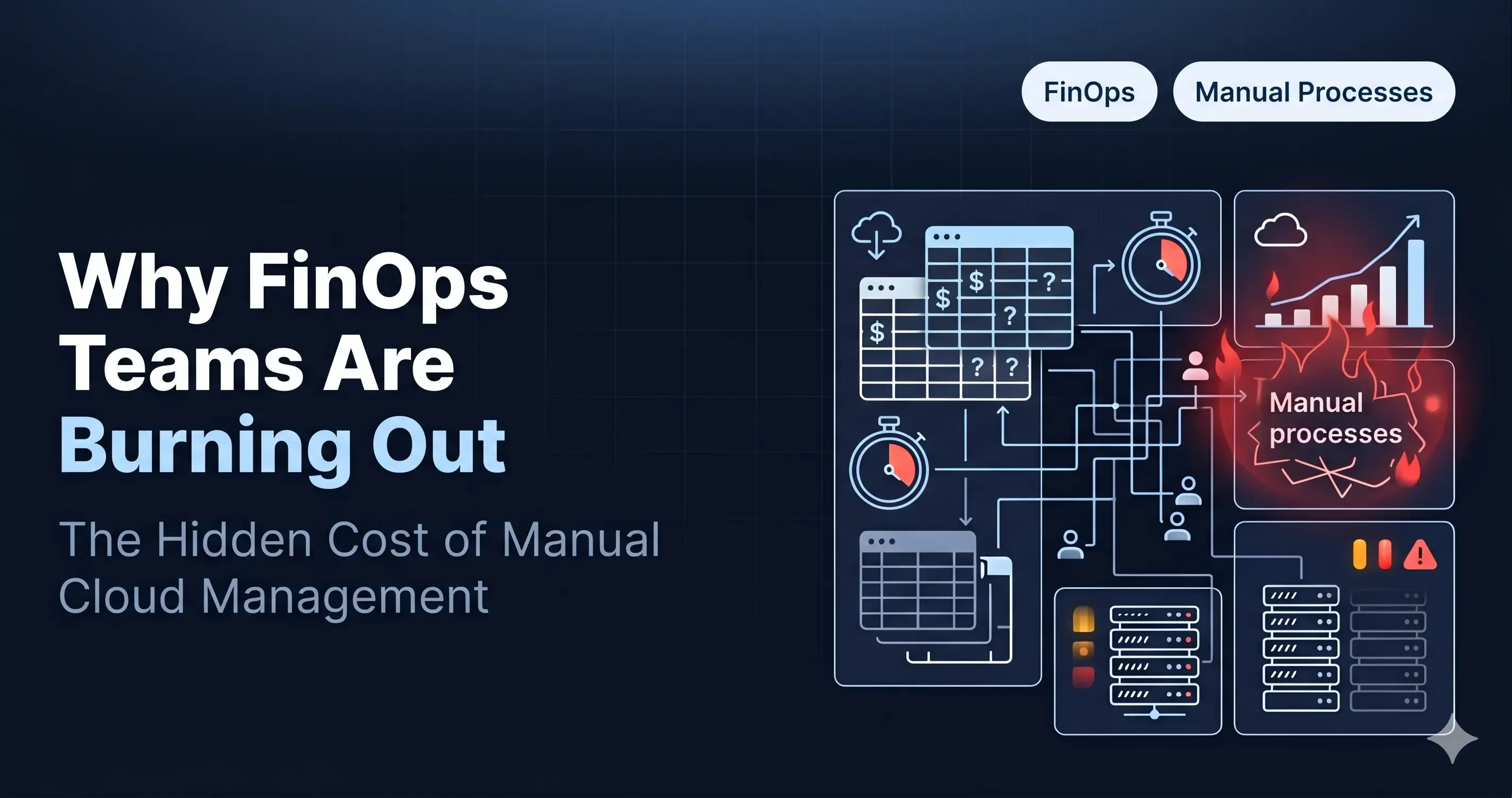
Why FinOps Teams Are Burning Out: The Hidden Cost of Manual Cloud Management
Addresses the growing burnout crisis in FinOps teams due to reactive, manual processes and constant fire-fighting, positioning automation and proactive governance as the solution
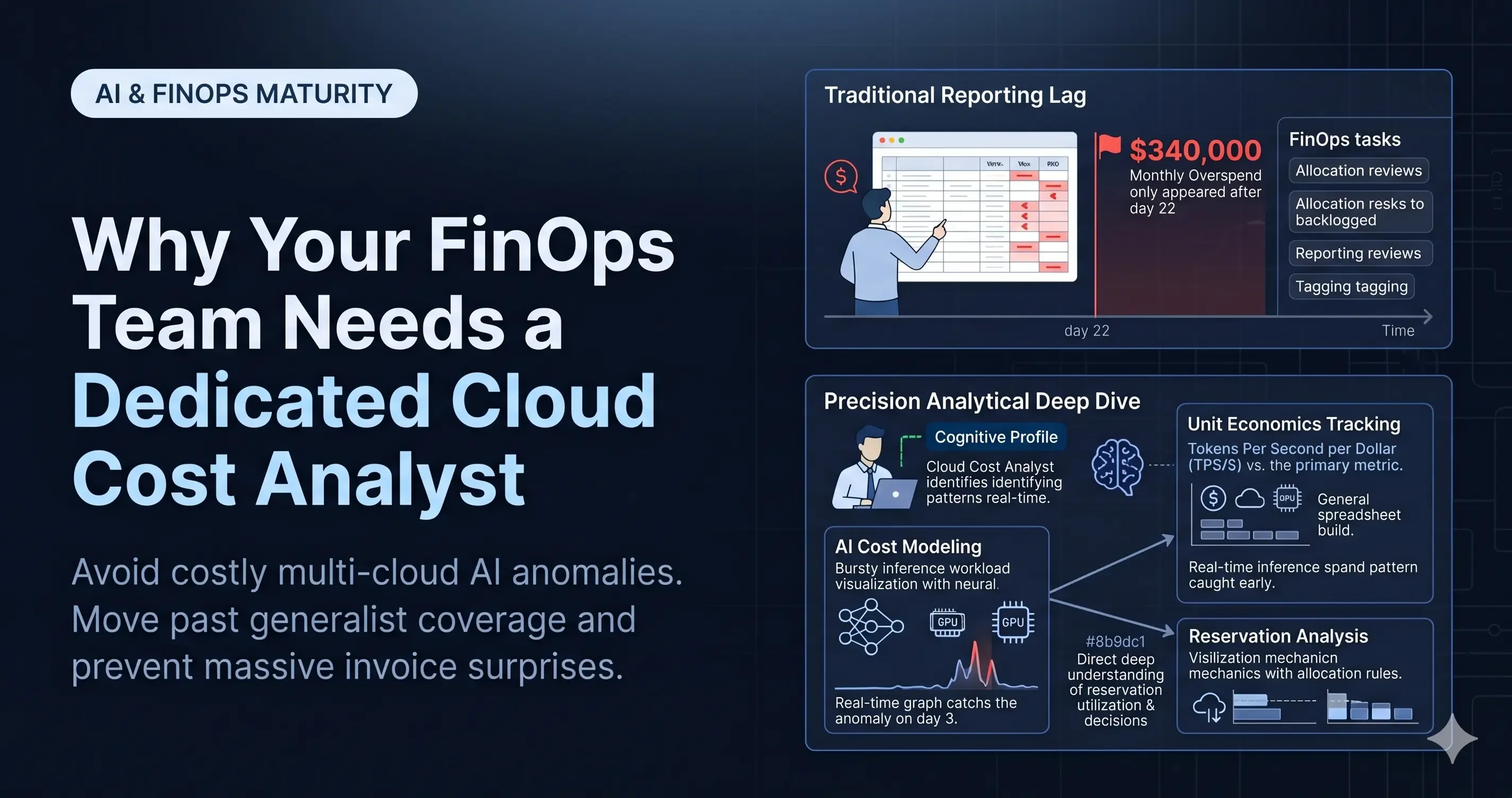
Why Your FinOps Team Needs a Dedicated Cloud Cost Analyst in 2026
Explores the emerging role of specialized cloud cost analysts and how they differ from traditional financial analysts in driving FinOps success
Designing Azure Landing Zone Cost Guardrails
Learn how to build runtime-enforced cost guardrails on Azure Landing Zones with mandatory tagging, dynamic budget automation, and AI cost governance. DigiUsher's FinOps OS closes the gap that native Azure Policy leaves open